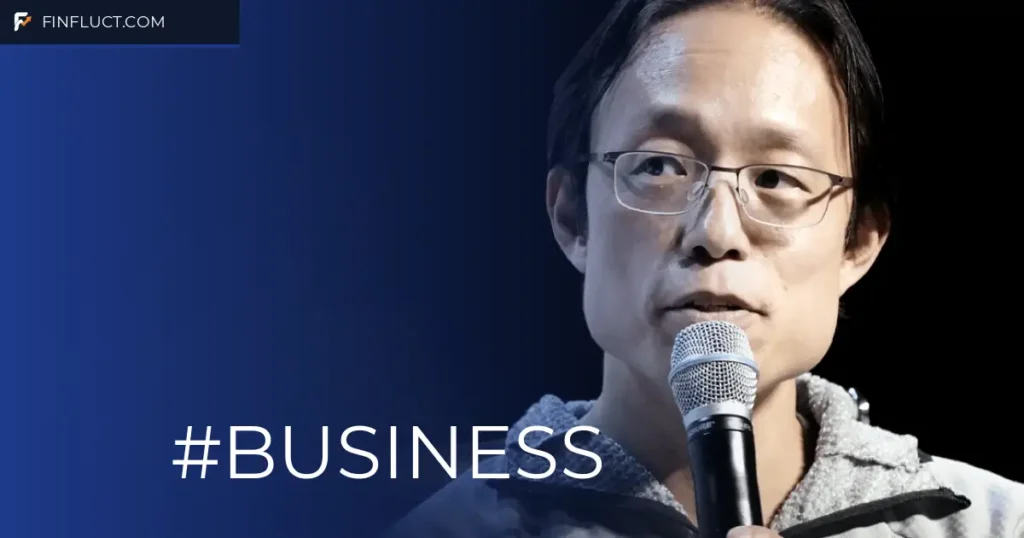
The digital landscape is on the verge of a tectonic shift, one that could render the traditional internet search and advertising models completely obsolete. Yat Siu, the visionary co-founder of Animoca Brands, believes we are standing at the dawn of “Web 4″—an era dominated by autonomous, agentic artificial intelligence (AI) interacting directly with the blockchain.
The Agentic AI Revolution in Numbers
- $10,000,000 – Animoca’s fresh capital allocation for early-stage agentic AI infrastructure.
- $900,000,000,000 – The size of the global advertising industry facing total disruption.
- 1,000x – The projected productivity growth rate for top-tier AI agent companies.
To capitalize on this transition, Animoca Brands has announced a new $10 million investment program dedicated to early-stage agentic AI infrastructure. Siu compares the current market environment to the seed-stage days of OpenAI and Anthropic half a decade ago, urging forward-looking investors to secure their positions early.
“The productivity growth in AI is literally a 1,000x. So we think the return profile is going to be a thousand-x amongst sort of the top companies.”
The Collapse of the $900 Billion Discovery Machine
For decades, the internet has run on an advertising-based economy. Search engines, social media platforms, and media outlets rely on human eyeballs to monetize discovery. However, Siu warns that the rise of agentic AI will flip this model upside down. Instead of humans browsing websites and clicking ads, autonomous agents will perform these tasks on our behalf.
In this new paradigm, companies will no longer pitch their products to human consumers. Instead, they will build Model Context Protocol (MCP) servers and Command Line Interface (CLI) tools designed specifically to be read and parsed by AI agents.
“Advertising is an almost $900 billion industry a year, which is all about discovery, and it will completely be flipped upside down. All of that value is going to go to the agents who are going to find stuff for you.”
What is Web 4?
Web 4 represents the convergence of decentralized blockchain technology and agentic AI. While Web3 established digital ownership, Web 4 allows autonomous AI agents to hold crypto wallets, execute microtransactions, and establish independent digital identities without relying on centralized tech giants.
Why Blockchain is Essential for AI Agents
Without decentralized rails, AI agents would remain tethered to the permissioned ecosystems of Apple, Google, or Microsoft. Blockchain provides these agents with financial sovereignty. By utilizing smart contracts and digital wallets, agents can trade assets, pay for API access, and settle transactions instantly.
This economic activity between autonomous programs is giving rise to what economists call “ghost GDP”—a layer of economic value generated entirely by AI-to-AI transactions. While some critics view this with skepticism, Siu views it as a massive expansion of the global economy, akin to Adam Smith’s invisible hand operating in a digital realm.
The New Labor Market: Agent Orchestration
As task execution becomes fully automated, the human skill set must adapt. Siu argues that the most valuable professionals of the future will not be those who write code or design graphics, but those who can manage fleets of AI agents.
- Task Execution: Handled entirely by specialized AI agents.
- Agent Orchestration: The human ability to direct, coordinate, and manage multiple agents to achieve complex goals.
- Visionary Leadership: Defining the ultimate objectives that agents work to accomplish.
“You’re hired because you can manage 10 agents well or 20 agents. The person who can manage 100 agents or 200 agents will be more valuable than the person who can manage only one.”
FAQs
What is agentic AI?
Agentic AI refers to artificial intelligence systems that can act autonomously, make decisions, and execute complex, multi-step tasks on behalf of a user, rather than simply answering questions like traditional chatbots.
How does blockchain support AI agents?
Blockchain provides AI agents with decentralized wallets, digital identities, and the ability to execute secure microtransactions without relying on centralized intermediaries.
Why will the advertising industry change?
Because AI agents will handle product discovery and purchasing decisions for humans, traditional visual ads targeted at human eyes will lose their effectiveness, shifting value to agent-friendly protocols.