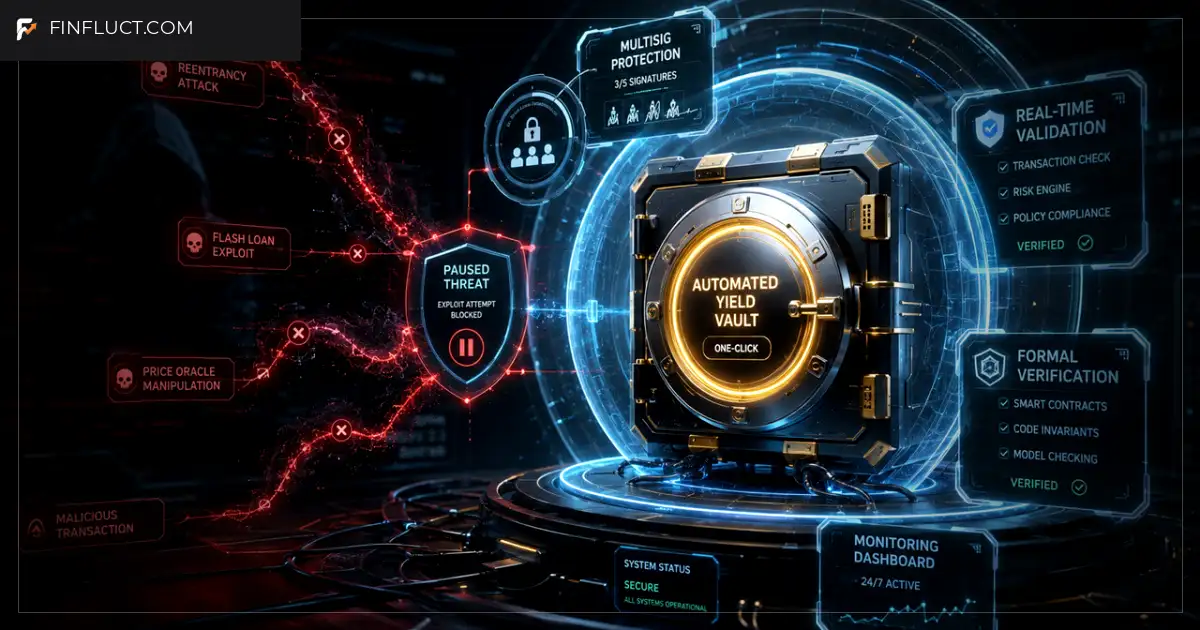
The recent discovery of a critical vulnerability within Zcash’s Orchard privacy pool has sent ripples through the crypto industry. A flaw that evaded detection by leading zero-knowledge cryptographers for four years was uncovered in a matter of days by a security researcher leveraging Anthropic’s Claude Opus 4.8 frontier AI model. This event not only saw ZEC‘s value tumble by roughly 38% but also raised fundamental questions about the crypto industry’s readiness for AI’s rapidly advancing capabilities in vulnerability discovery.
AI’s Evolving Role in Bug Detection
Historically, AI has been useful for flagging obvious coding mistakes. However, frontier models are now demonstrating a much deeper reasoning capacity, understanding how software is *intended* to behave and identifying subtle logical inconsistencies.
“The significance isn’t really that AI can find bugs,” explains Ben Goertzel, founder and CEO of SingularityNET. “It’s that the kind of bug it can now find has changed.”
The Zcash Orchard Flaw
In May, Taylor Hornby, a security researcher hired by Shielded Labs, discovered a critical flaw in Zcash’s Orchard circuit with assistance from Anthropic’s Claude Opus 4.8. Hidden in two lines of code, the bug stemmed from a check that appeared to validate transaction inputs but wasn’t actually enforcing the intended rules. This could have potentially allowed an attacker to create counterfeit ZEC inside the shielded pool without detection. Hornby built a working exploit to verify the vulnerability before reporting it to developers. An emergency fix was deployed on June 1.
A Paradigm Shift in Security Audits
This discovery signals a fundamental shift in how security research is conducted. The model of slow, artisanal audits by a handful of highly revered human specialists is now being augmented, and perhaps transformed, by AI capabilities.
“I think it’s an early marker of a shift that’s going to be hard to overstate,” Goertzel says. “The model of security research as a handful of revered human specialists doing slow, artisanal, deeply-expert audits doesn’t go away, but it stops being the whole game.”
Proactive Defense in a New Era
Goertzel believes the Orchard flaw belongs to a class of subtle logic bugs that frontier AI models are increasingly capable of finding, including smart-contract errors, access-control failures, and situations where software behaves differently than its designers intended. As these capabilities improve, security research is shifting toward a model where human specialists oversee continuous, AI-driven review that can analyze codebases far more extensively than traditional audits.
“Shielded Labs bringing on a researcher specifically to hunt protocol-level flaws with a frontier model before a malicious actor could is, I suspect, the template, not the exception,” Goertzel notes. “Proactive, AI-augmented, adversarial-by-design review becomes table stakes, and the protocols that don’t adopt it will increasingly be the ones learning about their vulnerabilities from the attacker rather than from a friendly.”
The Attacker-Defender Dynamic
Advances in AI are also reshaping the balance between attackers and defenders. Frontier models can rapidly test attack strategies, learn from the results, and uncover weaknesses at an unprecedented pace.
“In order to build up better defense, we have to use these frontier AI models as the potential attackers to stress test these systems,” Sean Ren, CEO of Sahara AI and a computer science professor at the University of Southern California, told Decrypt.
Blockchain’s Unique Exposure
Blockchain networks are particularly exposed because their open-source code can be analyzed directly by frontier AI models. These models can rapidly test attack strategies and identify vulnerabilities faster than traditional security reviews.
“If you think about frontier model labs like OpenAI, Anthropic, and Google DeepMind, they have earlier access to the strongest unpublished models and can conduct a lot of experiments on public network systems like blockchains, so they do have the power at hand,” Ren explains. “If someone with malicious intent had access to those capabilities, they could conduct attacks and create vulnerabilities.”
The Growing Security Gap
The window for adaptation may close faster than many expect. Danny Jenkins, CEO and co-founder of cybersecurity firm ThreatLocker, warns that AI-assisted vulnerability discovery is improving faster than many organizations can secure the software they already rely on.
“We have this huge gap that’s going to take years and years to get through,” Jenkins says. “All of this software is going to have all of these vulnerabilities, we’re not going to have fixes or updates for it for a long time, and people are going to be able to find those vulnerabilities very quickly.”
Accelerating Vulnerability Discovery
Jenkins emphasizes that AI is not fundamentally changing vulnerability research so much as dramatically accelerating it. Tasks that once required security researchers to review code and reverse engineer software manually can now be performed in seconds by modern models.
“Pre-AI, cybersecurity threats and exploits were increasing every year,” he states. “Post-AI, it’s become even faster, and I think it’s become faster for two reasons. One is that you can now use AI to help find vulnerabilities and exploits, and the number of people who have the ability to do this has massively grown. You don’t have to be a script kiddie now.”
Crypto’s Potential Advantage
Despite these risks, Goertzel argues that crypto may also be better positioned than other industries to adapt because its code is open, and its communities are highly security-focused.
“Crypto is standing closest to the door, but it’s also the part of the room that can see the door coming,” he concludes.
Frequently Asked Questions (FAQ)
- What was the Zcash Orchard vulnerability? It was a critical bug in Zcash’s privacy pool that could have allowed attackers to create counterfeit ZEC undetected.
- How was the vulnerability discovered? A security researcher utilized Anthropic’s Claude Opus 4.8 frontier AI model to analyze the code and identify the logical flaw.
- Why is this significant for the crypto industry? The discovery highlights AI’s growing capability to find complex, subtle vulnerabilities that previously eluded human analysis, necessitating a re-evaluation of security approaches.
- How can the crypto industry adapt? Experts suggest a shift towards proactive, continuous, AI-augmented audits, where AI acts as a ‘friendly adversary’ to stress-test systems.
- Is AI a threat or a tool for security? AI presents both a threat by accelerating exploit discovery and a powerful tool for defense by enabling deeper and faster security audits.