According to the latest research from Bitwise Europe, the spot price of the world’s leading cryptocurrency is experiencing a massive disconnect from its underlying macro fundamentals. The firm’s sovereign default model suggests that BTC is currently trading roughly $150,000 below its implied valuation.
The Sovereign Debt Crisis and Bitcoin’s Valuation
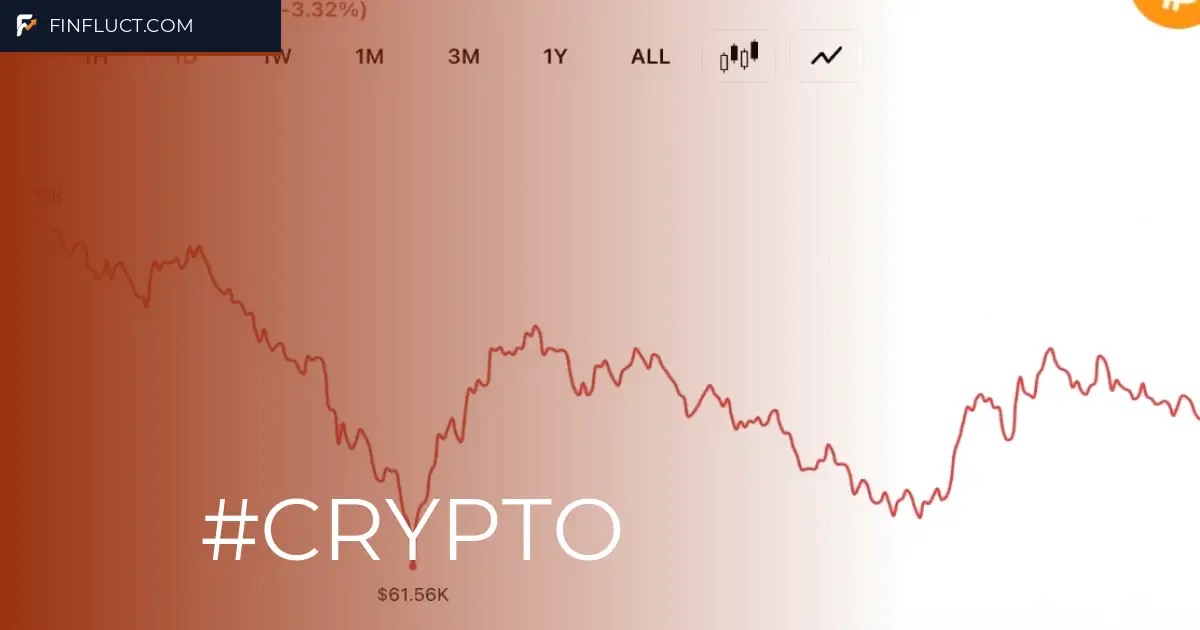
The valuation gap widened significantly in May 2026. While the asset briefly climbed to $83,000, a subsequent wave of exchange-traded product (ETP) outflows totaling over $1 billion dragged the price back down to the $72,000 liquidity pocket.
Bitwise Europe researchers André Dragosch and Luke Deans highlighted a theoretical model originally conceptualized by analyst Greg Foss in 2021. This framework calculates Bitcoin fair value as a hedge against sovereign default across G20 nations. Under current debt conditions, the model points to an illustrative fair value of $224,000.
“This model-implied figure is not a short-term price target, but rather a reflection of Bitcoin’s intrinsic value as a credit default swap on sovereign nations amid unprecedented global debt issuance,” the report notes.
Key Market and Macro Metrics:
- Projected global sovereign and corporate borrowing in 2026: $29 trillion (up 17% from 2024).
- Long-term holder (LTH) supply: 74.3% of total circulating supply.
- Total LTH balance: Record-breaking 14.85 million BTC.
May Market Dynamics: From Short Squeezes to ETP Outflows
The month of May started on a highly bullish note, with Bitcoin crossing $80,000 for the first time since late January. This upward move was largely mechanical. Perpetual funding rates had been negative for 21 out of 30 days in April, indicating heavily crowded short positions. When these positions unwound, approximately $42 million in short futures liquidations cleared within a single 24-hour window.
However, the second half of the month saw a complete reversal. Global Bitcoin ETPs experienced massive net outflows of $1.031 billion, pushing the Crypto Fear and Greed Index back into fear territory. Bitcoin was rejected at its 200-day moving average near $82,000 and retraced toward $72,000 to close the monthly candle.
A New Era at the Federal Reserve
On May 22, Kevin Warsh was sworn in as the new Federal Reserve Chair, succeeding Jerome Powell. A natural language processing analysis of Warsh’s recent Senate testimony suggests a slightly more hawkish stance than his predecessor. However, analysts note that if the Fed holds interest rates steady while inflation continues to climb, declining real yields could recreate a highly favorable macroeconomic backdrop for hard assets like Bitcoin.
Technical Crossroads: Reclaiming the Bull Market
Bitwise Europe identifies the $78,000 to $85,000 range as the market’s current midpoint of control. This critical zone represents the convergence of the True Market Mean, the short-term holder cost basis, and the aggregate cost basis for U.S. spot Bitcoin ETFs. The 200-day moving average sits right in the middle of this band at $80,500. A decisive weekly close above $85,000 would historically signal a transition into a full-scale bull market cycle.
FAQ: Frequently Asked Questions
Why does the sovereign default model value Bitcoin at $224,000?
The model treats Bitcoin as a sovereign default swap. As global governments prepare to borrow a record $29 trillion in 2026, the risk of sovereign debt stress rises. This increases the theoretical value of Bitcoin as a decentralized, non-sovereign store of value.
What is causing the current price stagnation?
Despite strong supply-side metrics, on-chain trading volumes across spot, derivatives, and ETF venues sat near yearly lows in May, showing temporary investor disengagement. This was compounded by over $1 billion in global ETP outflows.
Are long-term investors selling their Bitcoin?
No. Long-term holders are hoarding supply at unprecedented rates. LTH supply has reached an all-time high of 14.85 million BTC (74.3% of circulating supply), growing at 10.3 times the rate of monthly new coin issuance.