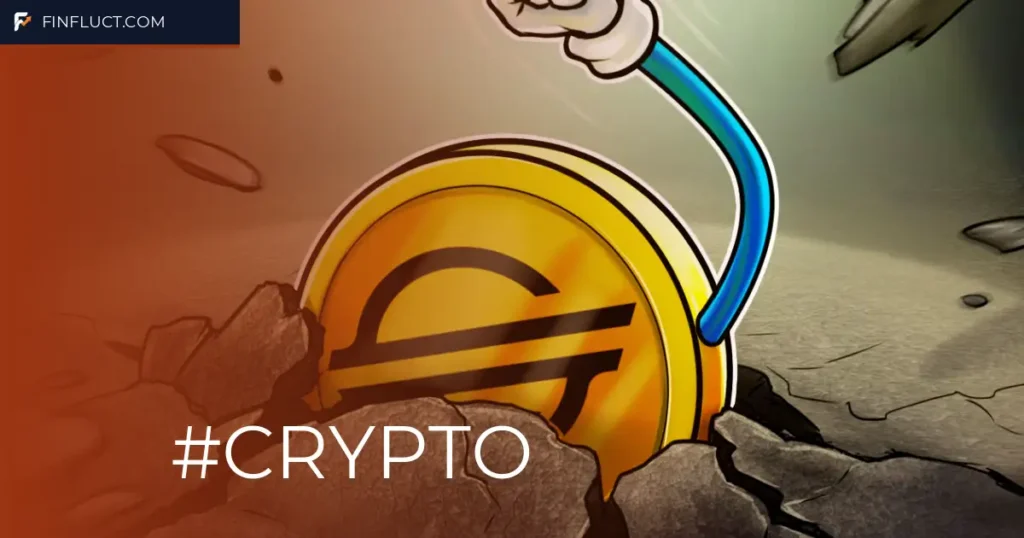
The Stellar Network‘s native token, XLM, has seen an impressive rally, climbing over 50% in the past week. This performance significantly outpaced the broader crypto market, which experienced a nearly 5% decline during the same period. The catalyst for this surge was a pivotal partnership announcement involving Depository Trust & Clearing Corporation (DTCC), a major U.S. financial institution.
Stellar XLM Skyrockets on Landmark DTCC Partnership
The cryptocurrency market buzzed with excitement following news of a collaboration between the Stellar Network and DTCC. This partnership, aimed at integrating DTCC‘s tokenized securities platform with Stellar, has sparked considerable investor and trader interest, leading to XLM‘s sharp price appreciation.
“This collaboration isn’t just a technical integration; it’s a profound validation of blockchain’s capacity to reshape traditional finance. DTCC‘s involvement signals a clear path towards mainstream adoption for digital assets,” a leading market analyst commented.
DTCC stands as a cornerstone of the U.S. financial infrastructure, clearing and settling $10 trillion to $12 trillion in securities transactions daily. Their decision to leverage Stellar for tokenized assets underscores a growing confidence in blockchain technology within established financial circles.
The DTCC Catalyst: Tokenizing Securities
In a recent press release, DTCC unveiled plans to launch its tokenized securities platform, integrated with the Stellar Network, in the first half of 2027. This initiative builds upon DTCC‘s existing tokenized trades, which commenced in July 2026, as part of its multi-chain strategy for tokenized asset issuance, reporting, corporate actions, and settlement.
Market Dynamics: A Powerful Short Squeeze Fuels the Rally
Following the DTCC announcement, XLM surged 51.75%, trading as high as $0.224 on Friday, marking its highest level since January. Trading volumes simultaneously rose sharply, indicating significant buyer interest. This upward movement was amplified by a notable short squeeze.
Data from CoinGlass reveals that since May 28, Stellar‘s short liquidations reached $12.41 million, nearly 1.8 times higher than long liquidations, which stood at $6.82 million. This means bearish traders faced significantly more forced closures as XLM climbed from approximately $0.15 to $0.224.
XLM‘s open interest nearly doubled during this period, hitting $292.11 million on Friday, suggesting heavy leverage was added by traders as the rally unfolded. Concurrently, the XLM‘s OI-weighted funding rate dropped to around -0.0270%, its deepest level since April. A negative funding rate indicates that short traders were paying long traders to maintain their positions, highlighting crowded bearish sentiment during the breakout.
What is a Short Squeeze? A short squeeze occurs when the price of an asset rapidly increases, forcing traders who have sold the asset short (betting on its decline) to buy it back to limit their losses. This forced buying creates additional upward pressure, intensifying the rally.
Historical Precedent: Rallies and Reversals
This latest Stellar breakout mirrors previous XLM rallies that ultimately concluded with steep corrections. For instance, in November 2024, XLM surged by roughly 640% following Donald Trump’s re-election as U.S. president. However, this rally quickly lost momentum, with XLM later dropping by about 68.6% from its local peak.
A similar pattern emerged in July 2025, when PayPal‘s stablecoin launch on Stellar and growing anticipation for the Protocol 23 upgrade helped XLM rally by around 140%. Yet, this upside was short-lived, as the XLM/USD pair subsequently corrected by approximately 73.8%.
“Crypto markets often exhibit cyclical behavior, where significant rallies, especially those driven by news, can be followed by periods of consolidation or correction as initial enthusiasm wanes and profit-taking occurs. Understanding these patterns is crucial for informed trading,” an expert in market cycles explained.
Navigating Critical Resistance: What Lies Ahead for XLM?
The recent XLM rally has pushed the token into a significant long-term resistance zone, increasing the risk of a pullback or consolidation. As of Friday, XLM was trading near the $0.198–$0.224 ceiling area. This zone also converges with three exponential moving averages (EMAs): the 50-week EMA (near $0.2216), the 100-week EMA (near $0.2281), and the 200-week EMA (near $0.2083).
Analyst MAGIC described this resistance confluence as “too strong for the first test.” A failure to decisively break above this resistance zone could send the XLM price towards the $0.112–$0.136 area, representing a 30%–40% drop from current levels, by June or July. This downside target aligns with the lower trendline of XLM‘s prevailing descending channel pattern.
Conversely, a decisive breakout above this resistance area would significantly increase the odds of XLM rallying towards the channel’s upper boundary, potentially reaching the $0.28–$0.30 range by June or July. This would represent an approximate 40% gain from current price levels.
Frequently Asked Questions (FAQ)
- What caused the recent XLM price surge?
The recent XLM price surge was driven by the announcement of a partnership between the Stellar Network and Depository Trust & Clearing Corporation (DTCC), a major U.S. financial institution planning to integrate its tokenized securities platform with Stellar. - What is a short squeeze and how did it impact XLM?
A short squeeze occurs when an asset’s price rises sharply, forcing traders who bet against it (short sellers) to buy back to cover their positions. For XLM, significant short liquidations amplified the upward price movement as bearish traders were compelled to close out their positions. - What are the potential resistance and support levels for XLM?
The current resistance zone for XLM is between $0.198–$0.224, reinforced by multiple EMAs. Failure to break this could see a drop to $0.112–$0.136. A successful breakout could lead to a rally towards $0.28–$0.30.