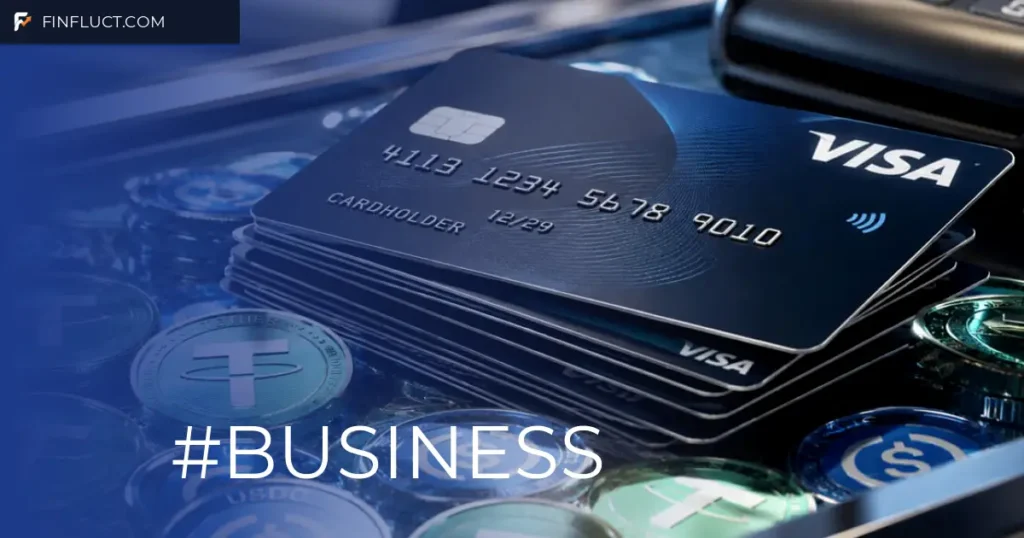
Stablecoins were built on the premise that removing financial intermediaries would erode the relevance of legacy payment networks. However, the fastest-growing consumer stablecoin product in the market today depends entirely on one of the world’s largest traditional payment processors.
The Irony of Mainstream Crypto Adoption
While early crypto pioneers envisioned a world of peer-to-peer cash free from corporate gatekeepers, the reality of retail adoption looks remarkably familiar. Consumers want to spend their digital dollars, and they are using plastic to do it.
Key Crypto-Card Metrics:
- Monthly spending volume: $600 million
- Cumulative on-chain card volume: $7.2 billion
- Total processed transactions: 24 million
- Active user wallets: 1.36 million
Data reported by The Kobeissi Letter reveals that approximately 90% of these transactions are processed through Visa. Within this ecosystem, USDT accounts for 62.5% of settled volume. Meanwhile, newer offerings like the Jupiter Card—a Visa debit card backed by USDC—have experienced a staggering 660% month-over-month growth.
“The ultimate irony of the Web3 payment revolution is that its most successful consumer product relies entirely on the legacy rails it promised to replace. Visa isn’t being disrupted; it is being funded by a new asset class that expands its reach at the point of sale.”
How the Integration Works Behind the Scenes
The magic of modern stablecoin cards lies in their frictionless user experience. Users deposit stablecoins like USDC into their wallets, which convert into fiat behind the scenes. The merchant receives ordinary local currency, meaning the blockchain never actually touches the physical point-of-sale terminal.
Bridge-enabled, stablecoin-linked Visa cards went live in 18 countries recently, with plans to expand to over 100 countries by the end of the year. This expansion will cover 175 million Visa merchant locations worldwide. Popular non-custodial wallets like Phantom and MetaMask are already distributing these cards to their user bases.
The Trillion-Dollar Battle for Consumer Wallets
Financial institutions are closely watching this space. Standard Chartered forecasts that the global stablecoin supply will reach $2 trillion by the end of 2028. If card spending maintains its current 2.2% share of the stablecoin market, annual crypto-card volume could soar to $45 billion. If penetration doubles as global access expands, that figure could approach $90 billion.
Even JPMorgan’s more conservative estimate of a $500 billion stablecoin supply implies billions in transaction fees for payment networks. This massive potential has sparked intense competition. Mastercard is already moving to acquire crypto-payment gateway BVNK for up to $1.8 billion to secure its own share of the on-chain economy.
Frequently Asked Questions (FAQ)
Do stablecoin cards settle directly on the blockchain?
No. The blockchain settlement occurs on the backend between the wallet provider and the card issuer. The merchant receives standard fiat currency through traditional payment rails.
Which stablecoins are most commonly used for card payments?
USDT remains the dominant asset, accounting for over 62% of settled volume, though USDC is growing rapidly due to its strong regulatory compliance and integration with platforms like Jupiter and Bridge.
Are stablecoins actually disrupting traditional banking?
Yes, but primarily in B2B transactions, cross-border prefunding, and FX corridors. In consumer retail, stablecoins are currently acting as a new funding source for legacy networks like Visa and Mastercard.