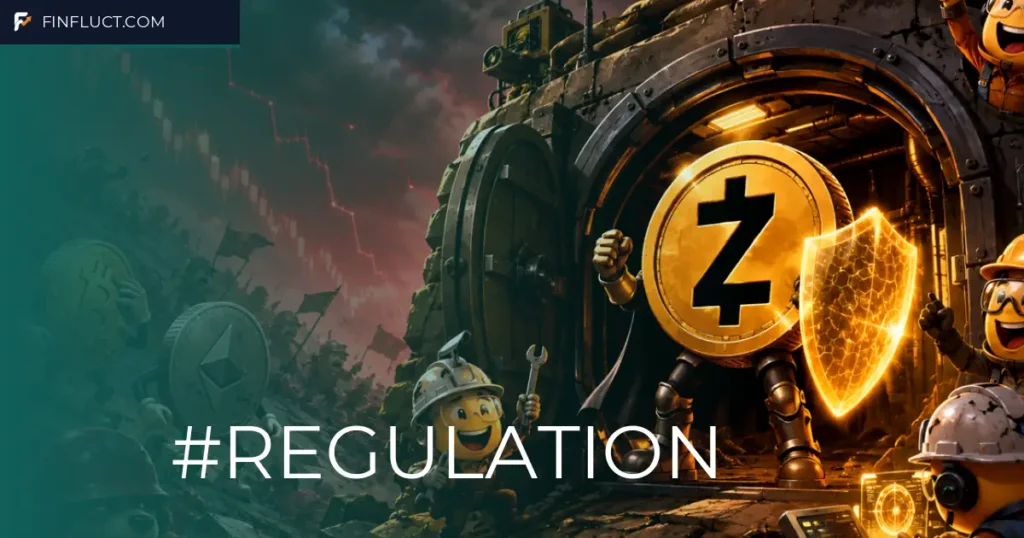
While the broader digital asset market bucked under heavy liquidation pressure, privacy-focused cryptocurrency Zcash staged a powerful rally. The catalyst was a highly coordinated, successful emergency patch of a critical soundness vulnerability in its flagship Orchard shielded pool.
Market Scare Turns Into Technical Triumph
The episode began with a brief scare when several block explorers falsely indicated that the Zcash blockchain had stopped producing blocks. However, as developers and infrastructure providers quickly clarified, the network was fully operational; the explorers were simply resyncing after upgrading their nodes.
By the time the technical details cleared, the market responded with a wave of buying. ZEC surged approximately 10%, trading near $620 and reaching intraday highs of $642. This rally stood in stark contrast to Bitcoin and Ethereum, which both shed over 4% due to macroeconomic headwinds and leveraged liquidations.
“Zcash was never down. Many block explorers have been using unpatched nodes. This is a common occurrence during major network updates,” stated technical coordinators close to the deployment.
Understanding the Orchard Soundness Flaw
The temporary suspension of Orchard transactions was a deliberate security measure. Developers executed an emergency soft fork to address a soundness vulnerability within the Orchard zero-knowledge proof circuit.
Key Metrics of the Incident:
- Discovered By: Independent researcher Taylor Hornby of Shielded Labs.
- Potential Impact: A soundness exploit could have allowed double-spending inside the Orchard pool.
- Supply Integrity: Zcash’s turnstile mechanism confirmed no inflation occurred; the 21 million ZEC limit remains intact.
- User Privacy: The flaw did not compromise transaction privacy or user data.
The Two-Step Resolution
To prevent malicious actors from reverse-engineering a public patch, the Zcash Foundation and ZODL engineers deployed a confidential, two-step response:
- Step 1 (Soft Fork): Activated at block 3,363,426, this temporary measure rejected any blocks or transactions containing Orchard proofs.
- Step 2 (NU6.2 Hard Fork): Activated at block 3,364,600, this upgrade permanently re-enabled Orchard with a corrected circuit design.
Because Orchard utilizes the advanced Halo 2 proof system—eliminating the need for a trusted setup—fixing the circuit required modifying the pinned verifying key. This consensus-level change necessitated a full hard fork rather than a simple node client update.
Strong Market Resilience
The swift resolution of only the second protocol-level security incident in Zcash’s history boosted investor confidence. Traders interpreted the quick fix as a validation of the network’s robust governance and developer response times. As over $1 billion in leveraged long positions were wiped out across the wider crypto market, ZEC’s upward trajectory highlighted growing institutional interest in resilient zero-knowledge privacy tech.
Frequently Asked Questions (FAQ)
Did the Zcash blockchain actually halt?
No. The Zcash network remained fully online, and miners continued to confirm transactions. Only certain third-party block explorers experienced delays while updating their node software.
Was any money stolen or duplicated?
No. On-chain audit checks confirmed that no unauthorized ZEC was created, and the total supply cap remains completely secure.
Do regular ZEC holders need to take action?
No action is required for standard users or wallet holders. Node operators and miners must upgrade to Zebra 5.0.0 or the latest Zcashd release to remain compliant with the updated network rules.