The announcement has sparked intense speculation across the Web3 space. Is the founder abandoning the ecosystem, or is this a calculated demonstration of Cardano’s decentralized reality? Hoskinson’s public pause highlights a fundamental design paradox: while the market holds him personally accountable for the network’s performance, the actual keys to the protocol now lie in the hands of the community.
The Illusion of Founder Control
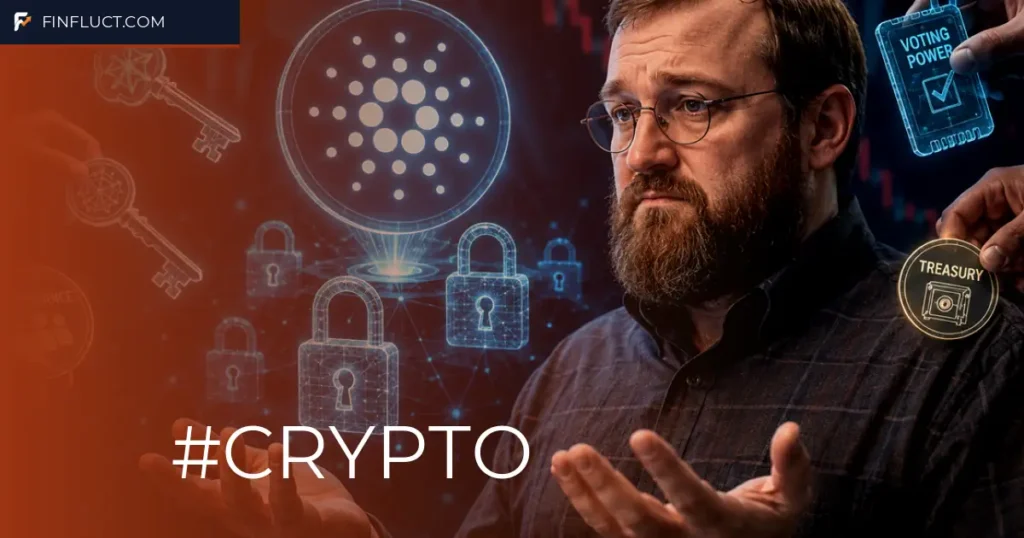
In a recent video address, Hoskinson expressed deep frustration over the community’s reaction to the current market downturn and slow ecosystem growth. He made it clear that he no longer holds the operational levers many assume are his to pull.
“I don’t have any special powers with Cardano. I don’t have governance keys, I cannot initiate a hard fork, and I do not even own the Cardano trademark.”
Under the current Voltaire governance framework, major network decisions—including protocol parameter changes, treasury withdrawals, and hard forks—require approval from Decentralized Representatives (DReps), Stake Pool Operators (SPOs), and the Constitutional Committee. This structure was intentionally designed to transition control away from Input Output Global (IOG) and the founder, yet retail investors continue to demand a centralized rescue during bearish cycles.
Cardano Market Performance Snapshot
- Current Rank: #14 by market cap
- 24-Hour Change: -10.01%
- 30-Day Decline: -25%
- Distance from ATH: -93%
The 32 Million ADA Funding Battle
The timing of Hoskinson’s break is closely tied to an ongoing political battle over the ecosystem’s treasury. Currently, a major proposal is on the table requesting 32.92 million ADA for IO Research to fund ongoing scalability, developer tooling, and scientific research.
Many DReps have resisted this proposal, questioning the efficiency of capital allocation and demanding more accountability from legacy institutions. Hoskinson previously warned that rejecting these funds could force top-tier scientists to leave the project, creating a standoff that serves as a live test of Cardano’s decentralized governance.
Can Cardano Survive Without Its Figurehead?
For long-term believers, this friction is a necessary step toward true decentralization. If the network is to succeed, it must prove it can coordinate upgrades, manage its treasury, and attract developers without relying on a single charismatic leader.
However, the short-term risk is clear. Without Hoskinson actively driving the narrative, Cardano faces the double burden of founder dependency in public perception and decentralized gridlock in execution. The upcoming vote on the 2026 budget will be the ultimate indicator of whether the community can lead itself.
FAQ
Why did Charles Hoskinson take a break?
Hoskinson announced a break due to intense public pressure and frustration over being blamed for ADA’s price performance and ecosystem stagnation, despite no longer holding direct control over the network’s governance.
Who controls Cardano now?
Cardano is governed by a decentralized system consisting of DReps (Decentralized Representatives), Stake Pool Operators (SPOs), and the Constitutional Committee. The Cardano Foundation owns the trademark, and treasury funds are allocated via community voting.
What is the current funding dispute about?
The community is voting on a proposal to allocate 32.92 million ADA to IO Research. Some governance members are resisting, leading to tensions over how treasury funds should be distributed for future development.