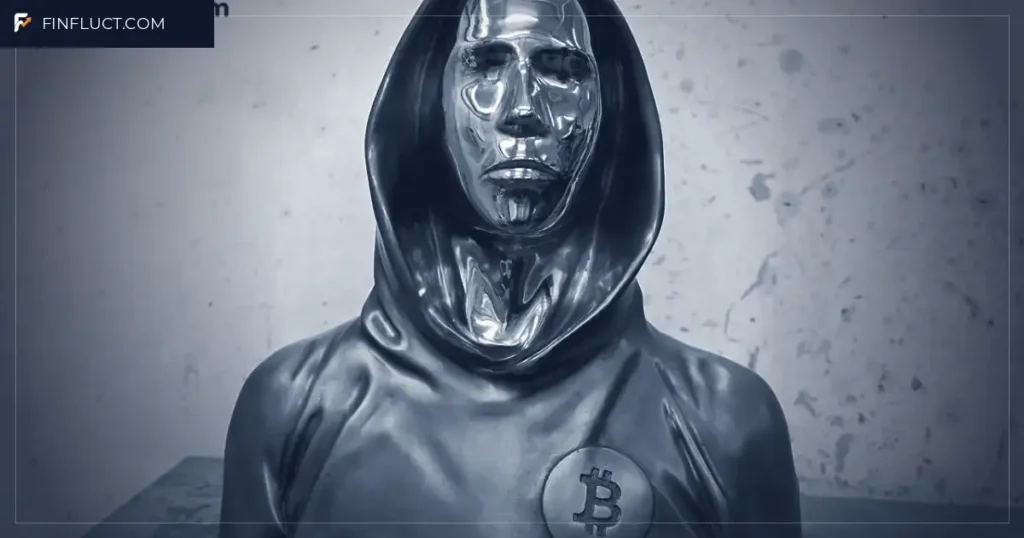
A groundbreaking legal battle is unfolding in the New York Supreme Court, where anonymous plaintiffs are attempting to claim ownership of an astonishing 3.8 million BTC, valued at approximately $293 billion. This massive cache includes a significant portion of coins widely believed to belong to Bitcoin’s enigmatic creator, Satoshi Nakamoto, alongside other long-dormant digital assets.
The Unprecedented Claim: Lost Property or Digital Heist?
The lawsuit, filed on March 11, 2026, and later expanded to name 39,069 “John Doe” defendant addresses, centers on a novel interpretation of New York’s lost-and-found statute. A plaintiff, identified only as “Noah Doe,” asserts he used a proprietary algorithm to identify these inactive Bitcoin addresses. His audacious next step involved physically delivering USB drives containing these addresses to the NYPD 17th Precinct, declaring them “found property.”
The core of Noah Doe’s legal strategy hinges on a critical, yet highly contested, valuation: that each address holds less than $10 in Bitcoin. This figure is crucial because it triggers Section 257(2) of New York’s Personal Property Law, a provision designed for low-value lost items that allows title to vest in the finder after just one year, bypassing lengthy police holding periods.
Galaxy Research Dismantles the Valuation
However, leading blockchain analytics firm Galaxy Research has thoroughly debunked this foundational claim. Analyst Alex Thorn confirmed the lawsuit’s existence and his team’s comprehensive analysis reveals a stark reality.
- Total BTC in dispute: 3,799,629 BTC
- Current value: Approximately $293.5 billion
- Average address holding: 97.25 BTC (worth ~$7.5 million)
- Median address holding: 50 BTC (worth ~$3.86 million)
“The distance between ‘under $10′ and $293.5 billion is a gap of nine orders of magnitude,” states the Galaxy report, highlighting the profound discrepancy in the plaintiffs’ valuation.
A Defendant Pool Riddled with Complications
The list of defendant addresses itself presents significant legal hurdles. It includes:
- John Doe #1: The infamous Mt. Gox hacker address, holding nearly 80,000 BTC stolen in 2011, which remains actively contested.
- John Doe #104: The Counterparty burn address, provably unspendable and never controlled by any individual.
- 21,923 addresses: These exhibit the distinct “Patoshi” nonce pattern, strongly linked to Satoshi Nakamoto, holding an estimated 1.096 million BTC.
None of these categories align with a standard legal definition of abandoned property, further complicating the plaintiffs’ case. Intriguingly, Galaxy’s report also notes a 99.7% overlap with Bitcoin addresses previously claimed by Craig Wright in the Kleiman v. Wright litigation, though no direct connection to the current case has been established.
The Questionable Onchain Service Method
To notify 39,069 anonymous defendants, the plaintiffs secured court approval for an onchain service method. This involved sending OP_RETURN messages containing a link to the legal pleadings to each address. Galaxy Research verified this operation, confirming 98 batch transactions across specific Bitcoin blocks, each delivering 546 satoshis (roughly 4 cents) alongside the notice.
However, the efficacy of this method is highly debatable. Many Bitcoin wallet software applications do not display OP_RETURN payloads, and most filter out “dust” transactions by default. This raises serious questions about whether the defendants were genuinely served.
“The method takes the outward form of onchain service without delivering the thing service is supposed to do, which is reach the person being served,” observes the Galaxy study, casting doubt on the legal validity of the notification.
Adding another layer of skepticism, the Affirmation of Service was signed by a “Carlos J. Voltron,” described as a blockchain engineer. Public records searches by Galaxy Research found no such individual active in the field, with the name primarily linked to a satirical piece. If the affiant’s identity is unverified, any subsequent judgment could face significant challenges.
What’s at Stake? A Cloud on Title, Not Private Keys
Even if the plaintiffs were to achieve a complete victory, it wouldn’t grant them direct access to private keys or the ability to spend the Bitcoin. Instead, a New York judgment would create a legal document – essentially “a cloud on title,” as Alex Thorn describes it. This document could be used to freeze assets if any of the targeted coins ever moved to a regulated exchange or custodian, forcing holders to publicly prove ownership and sacrifice their anonymity.
A technical default is anticipated by late June 2026. However, Thorn estimates the probability of the court granting the full title-vesting declaration on default as low to moderate, citing the novelty of the legal theory, the immense stakes, and the questionable affidavit of service as reasons for the court to demand a hearing.
FAQ: Understanding the Dormant Bitcoin Lawsuit
Q: What is the core claim in this lawsuit?
A: Anonymous plaintiffs claim ownership of approximately 3.8 million BTC, valued at $293 billion, by invoking New York’s lost-and-found property statute. They argue they “found” these dormant Bitcoin addresses.
Q: Why is the $10 valuation significant?
A: The plaintiffs claim each address holds less than $10, which would allow them to bypass a longer waiting period and gain title to the “lost” property much faster under New York law.
Q: What did Galaxy Research find?
A: Galaxy Research’s onchain analysis revealed that the average address holds 97.25 BTC (worth millions), not under $10, fundamentally undermining the plaintiffs’ legal premise.
Q: Are Satoshi Nakamoto’s coins involved?
A: Yes, a significant portion of the targeted addresses, estimated at 1.096 million BTC, exhibit patterns strongly linked to Satoshi Nakamoto.
Q: How were defendants supposedly notified?
A: The court authorized “onchain service” via OP_RETURN messages on the Bitcoin blockchain, linking to the legal documents. However, experts question if this method effectively notifies wallet holders.
Q: What would a plaintiff victory mean?
A: A victory would not grant private keys but would create a legal “cloud on title,” potentially allowing plaintiffs to freeze assets if they move to regulated exchanges, forcing true owners to reveal themselves.