In an era dominated by massive GPU clusters and soaring hardware costs, a stunning experiment proves that software efficiency can breathe new life into legacy silicon.
Back to 1997: Squeezing Modern AI into a Retro PC
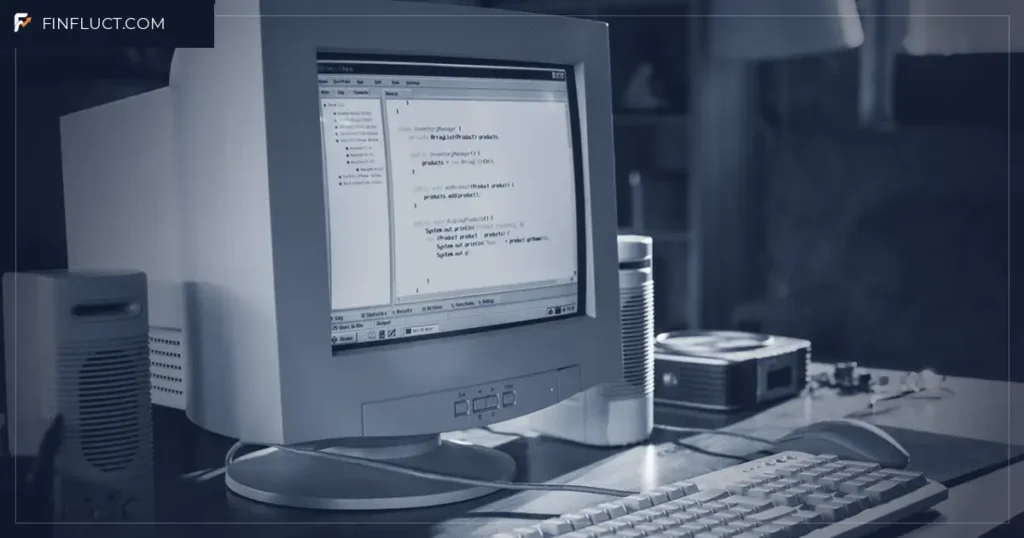
The research team at EXO Labs recently demonstrated a modern large language model running on a beige-box PC from 1997. Powered by an ancient Pentium II processor and equipped with just 128 MB of RAM, the system successfully loaded and executed a modified version of Meta’s Llama 2.
This achievement challenges the industry assumption that artificial intelligence progress requires endless hardware scaling. Instead of relying on brute-force computing power, the project highlights how smart engineering can bypass physical hardware limitations.
Legacy Hardware Specs & AI Configuration
- Processor: Intel Pentium II (Released 1997)
- System Memory: 128 MB RAM
- AI Model: Customized Llama 2
- Quantization Method: BitNet Ternary Weights (-1, 0, 1)
The Magic Behind Ternary Weights
The key to this technical feat is an innovative software architecture known as BitNet. Traditional neural networks rely on high-precision floating-point math, which demands massive memory bandwidth. BitNet simplifies this by using ternary weights restricted to just three values: -1, 0, and 1.
This extreme quantization slashes memory pressure and computational overhead. While the output on the Pentium II arrived slowly—word by word—the demonstration successfully proved that running modern AI on severely constrained legacy hardware is entirely possible.
“The obsession with brute-force compute has blinded the industry to the sheer power of algorithmic efficiency. This demo shows that we can achieve massive cost savings by writing smarter code rather than buying more expensive silicon.”
Business Implications: Cutting Capex and Boosting Edge AI
For enterprise buyers and software developers, the implications of this experiment are profound. By prioritizing software-first efficiency, companies can deploy capable models on mid-range laptops, retail microservers, and edge devices without investing in expensive NVDA or AMD hardware.
This approach directly addresses the growing energy footprint of data centers, which has drawn intense scrutiny from policymakers. Smarter quantization and data layout can democratize AI access, bringing advanced models to schools, startups, and remote locations previously locked out by high hardware costs.
Frequently Asked Questions (FAQ)
How did the model fit into only 128 MB of RAM?
By utilizing BitNet, the model’s weights were compressed into a ternary format (-1, 0, 1). This drastically reduced the memory footprint, allowing a modified version of Llama 2 to fit into legacy RAM limits.
Is a Pentium II viable for everyday AI tasks?
No, the generation speed on a 1997 processor is too slow for practical business use. The demo serves as a proof of concept to show how these optimization techniques can make modern budget hardware highly efficient.
Does this technology eliminate the need for modern GPUs?
Not for heavy training workloads. However, for inference (running existing models), ternary-weight architectures can significantly reduce the need for high-end accelerators, lowering operational costs for businesses.