Record Outflows: $2.8 Billion Exits Bitcoin ETFs
Weekly figures paint a clear picture: outflows began with $1 billion in mid-May, escalating to $1.26 billion the following week, and reaching $1.30 billion this current week. These figures underscore a pronounced change in investor outlook since the middle of May, pushing year-to-date ETF flows into negative territory.
“These aren’t just typical profit-taking maneuvers or minor adjustments to hedged positions,” noted analysts at Galaxy Research. “What we’re witnessing is a real directional recalibration in the market, impacting the overall sentiment for digital asset investments.”
Shifting Capital: AI Boom and Geopolitical Factors
Several external factors appear to be influencing this capital rotation. The burgeoning Artificial Intelligence (AI) sector, alongside geopolitical tensions such as the U.S.-Iran situation, are frequently cited. A recent report from Coinshares specifically linked the Middle East conflict to the ETF outflows.
The traditional stock market, particularly the S&P 500, has seen a surge, hitting new all-time highs. This growth is largely driven by a select few companies, notably the “Magnificent Seven” and other AI-related firms. This suggests that investor attention and capital are shifting towards sectors perceived as offering stronger immediate returns. For instance, Micron, a leading semiconductor manufacturer, saw its stock surge 207% after a U.S. presidential endorsement on May 22, boosting its market cap from $850 billion to $1 trillion in just five days.
Bitcoin’s Retreat and On-chain Signals
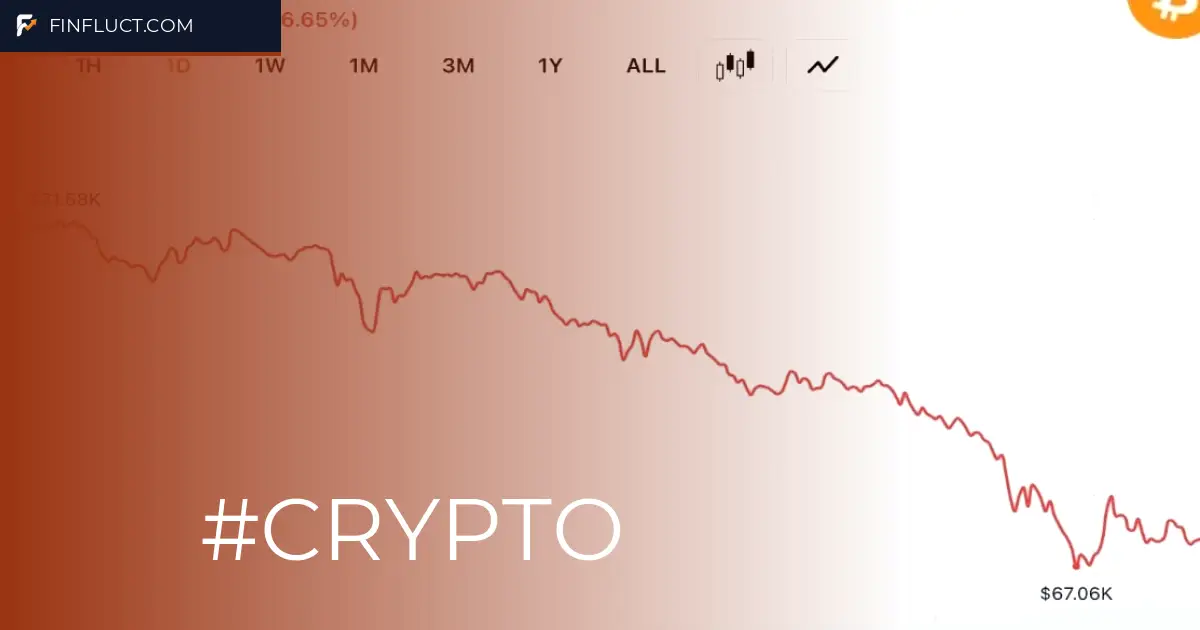
While traditional markets flourish, Bitcoin has struggled. The digital asset is down approximately 5.4% over the past week and month, trading below $74,000 and revisiting a six-week low after a failed attempt to break past the $82,000 level.
On-chain analytics platform CryptoQuant provides data supporting this bearish sentiment:
- Whale balances (holding 1K-10K BTC) are contracting at the fastest rate of 2026, a pattern reminiscent of the 2022 bear market.
- Dolphin balances (holding 100-1K BTC) have fallen below their 365-day moving average, a historical indicator of sustained price corrections.
- Long-term holder supply has reached a record 15.8 million BTC. However, this is interpreted as a bearish sign, indicating a lack of new buyers rather than active accumulation.
- Short-term holder supply has decreased from 6.4 million BTC in December to roughly 4.2 million BTC today, with about 900,000 BTC of this decline attributed to Coinbase reserves maturing into long-term holdings.
Even prediction markets reflect this shift. On Myriad, while there’s a 59% chance for WTI crude to reach $120, bullish conviction for Bitcoin has significantly waned. The probability of Bitcoin reaching $84,000 has dropped from 92% on May 6 to just 63%, indicating a clear decline in optimistic forecasts.
FAQ: Understanding the Bitcoin ETF Outflows
What caused the recent Bitcoin ETF outflows?
The outflows are attributed to a combination of factors, including a rotation of institutional capital towards the booming AI sector and traditional stock markets, as well as geopolitical tensions.
How much capital has left Bitcoin ETFs?
A total of $2.8 billion has exited Bitcoin ETFs over nine consecutive days, with year-to-date flows now turning negative.
What does “directional recalibration” mean for crypto?
It suggests a fundamental shift in investment strategy by large investors, moving beyond simple profit-taking to a more sustained reallocation of funds away from digital assets.