Bitcoin Navigates Volatile Waters as Key Levels Hold
The cryptocurrency market is buzzing with uncertainty as BTC finds itself trapped in a tight trading range. On May 31, 2026, Bitcoin hovered around $73,840, oscillating between $73,412 and $74,110. This narrow price action comes amidst conflicting signals from technical indicators and a divergence in institutional investor behavior, leaving traders on edge about the next significant move for the leading digital asset.
Short-Term Price Dynamics: A Battle for Control
Examining the 1-hour chart, Bitcoin has shown resilience, establishing a series of higher lows since touching $73,100. This pattern suggests some immediate buying interest. However, the price has repeatedly met strong resistance near the $74,100 to $74,200 zone, creating a compressed trading range. The intraday support is identified between $73,600 and $73,700, with $73,100 acting as a critical floor. A confirmed hourly close above $74,200 could pave the way towards $75,000 and potentially $76,000. Conversely, a break below $73,500 would shift the near-term outlook to bearish, bringing $73,100 and $72,400 back into focus. Volume remains subdued, indicating a lack of strong directional conviction from either buyers or sellers.
Consolidation or Distribution? The 4-Hour Perspective
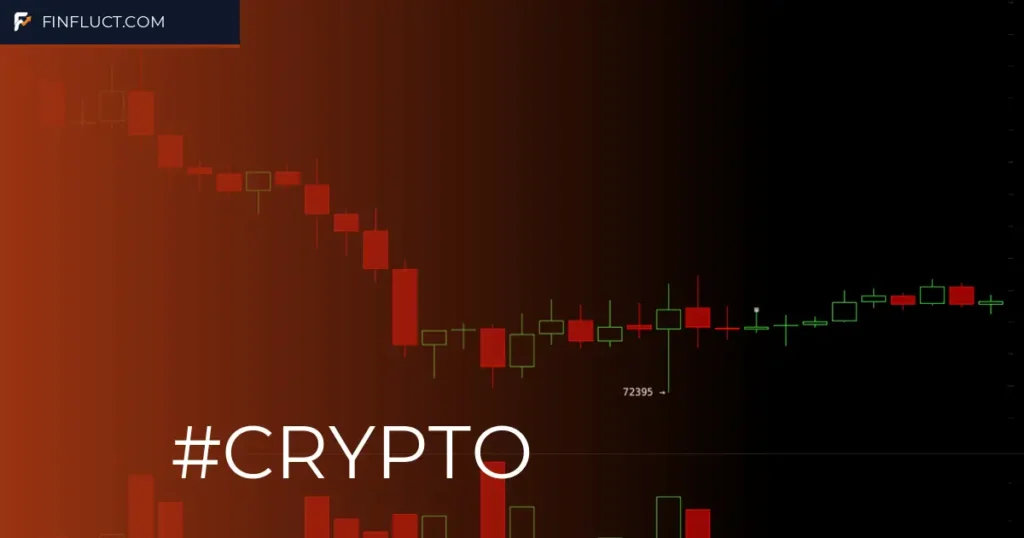
The 4-hour chart reveals a period of consolidation following a notable decline from approximately $78,000 to a low near $72,400. Since this selloff, Bitcoin has traded within a range of $73,000 to $74,500. Declining volume during this sideways movement implies that neither bulls nor bears are aggressively pushing their positions at current valuations. While the structure hints at an accumulation phase, a definitive breakout has yet to materialize. Aggressive traders are eyeing the $73,000 to $73,300 area for potential entries, while a more cautious approach requires a sustained close above $74,200 to $74,500. Upside targets include $74,500, $76,000, and $77,500. A breach and hold below $72,400 would invalidate the consolidation thesis, risking a move towards the $71,000 to $70,000 range.
Daily Chart Reveals Lingering Bearish Pressure
For Bitcoin bulls, the daily chart presents a more challenging picture. The asset has formed a clear downtrend since peaking near $82,800, characterized by a sequence of lower highs and lower lows. The most recent daily low was around $72,400, followed by a minor bounce, but without a confirmed reversal candle or a reclaim of higher ground, the downtrend remains intact. Increased volume during the recent selloff is interpreted by analysts as genuine distribution rather than a temporary shakeout. Key daily resistance levels are found at $74,500, $76,000, and $77,500. The broader trend bias will remain neutral-to-bearish until Bitcoin decisively reclaims the $76,000 to $77,000 zone on a daily close. TradingView’s aggregate moving average panel reinforces this view, with 11 out of 15 moving averages signaling sell pressure against the current price, encompassing various exponential and simple moving averages.
Market Sentiment and Institutional Shifts
The broader market sentiment is leaning towards caution, influenced by significant movements from institutional players and prominent crypto analysts.
- Tether (USDT) saw a substantial market cap reduction, with $1.2 billion burned in a 24-hour period. This action typically indicates real dollars exiting the system, a pattern that preceded Bitcoin‘s drop from $90,000 to $60,000 earlier in the year.
- Stablecoin dominance, measured by the combined market caps of USDT.D and USDC.D, has climbed above 10.5%. This level is often seen as a ‘risk-off’ rotation, where investors move capital from volatile assets like Bitcoin into cash equivalents.
- BlackRock’s IBIT, a major spot Bitcoin ETF, offloaded $2.1 billion worth of Bitcoin over the last ten days, signaling a significant institutional outflow.
- Polymarket data indicates an 85% probability that Bitcoin will touch $70,000 before reaching $90,000.
“The recent Tether burns and rising stablecoin dominance are clear indicators of capital flight from risk assets. History shows us these are often precursors to significant market corrections for Bitcoin,” commented Crypto Rover, a prominent crypto analyst. “Institutional actions, like BlackRock’s recent divestment, only reinforce this cautious outlook.”
Technical Indicators: A Mixed Bag
The technical picture presents a complex mosaic of signals. The oscillator composite currently registers as neutral. The 14-period Relative Strength Index (RSI) stands at 37, while the Stochastic RSI Fast at 10 hints at bullish potential. The Commodity Channel Index (CCI) at negative 117 also suggests upside. However, the Moving Average Convergence/Divergence (MACD) level is at negative 1,105, pointing lower, a sentiment echoed by the Momentum indicator at negative 3,843. This results in an overall neutral aggregate for oscillators, reflecting the current range-bound price action.
In contrast, the moving average (MA) panel leans strongly bearish. The 10-, 20-, 30-, 50-, and 200-period exponential and simple moving averages all sit above the current price, indicating significant overhead resistance. Only the 100-period simple moving average at $73,167 and the Hull moving average at $72,795 offer a bullish tilt. The volume-weighted moving average at $77,393 further supports the bearish bias. The consensus from moving averages suggests that Bitcoin is trading below most medium and long-term trend benchmarks, favoring downside until these levels are reclaimed.
FAQ: Understanding Bitcoin’s Current Market
- What is Bitcoin’s current trading range? Bitcoin is currently trading in a narrow band between $73,412 and $74,110, with a focus around $73,840.
- What are the key resistance levels to watch? Short-term resistance is at $74,200, with daily resistance at $74,500, $76,000, and $77,500.
- What factors are contributing to bearish sentiment? Significant Tether burns, rising stablecoin dominance (a ‘risk-off’ signal), BlackRock’s IBIT selling Bitcoin, and a clear downtrend on the daily chart are all contributing to a cautious outlook.
- Is there any bullish indication? Short-term charts show higher lows forming, and some oscillators like Stochastic RSI Fast and CCI are flashing bullish signals, suggesting potential for short-term stabilization.
- What is the significance of stablecoin dominance? When stablecoin dominance rises, it often indicates that investors are moving out of volatile assets like Bitcoin and into more stable cash equivalents, signaling a ‘risk-off’ environment.